
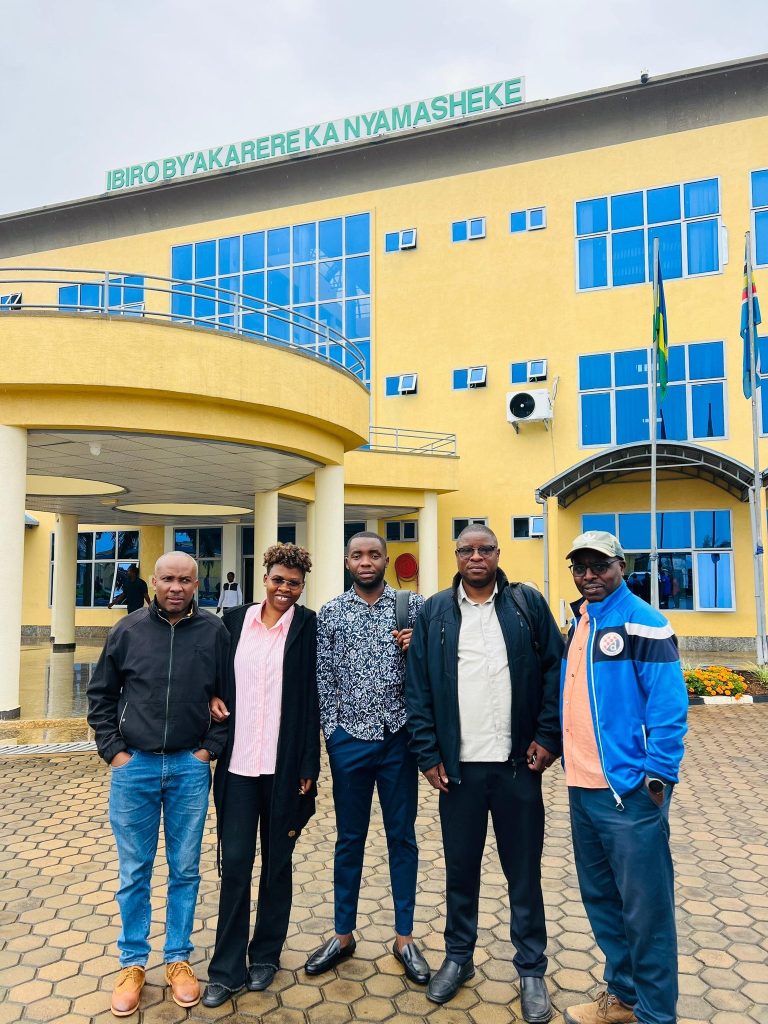
A research team from the Faculty of Environmental Studies at UNILAK conducted a three-day field visit to Nyamasheke District from February 25 to 27, 2026, as part of an ongoing Waste Characterization and Analysis project aimed at strengthening sustainable waste management practices in Rwanda.
The field study focused on collecting and analyzing data on waste streams within the district. Through on-site assessments, sampling, and stakeholder engagement, the team sought to better understand the composition, sources, and patterns of waste generation in both urban and rural settings.
According to the research team, the project is designed to generate reliable, evidence-based data that can guide policymakers, local authorities, and environmental stakeholders in designing efficient and sustainable waste management systems. The findings are expected to contribute to improved waste segregation, recycling initiatives, and environmentally responsible disposal methods.
The initiative aligns with Rwanda’s national environmental policies and supports global best practices in waste management, particularly in promoting sustainability, public health, and environmental protection. It also reflects UNILAK commitment to applied research that addresses real-world challenges and contributes to national development.
The team expressed appreciation for the cooperation received from local authorities and community members in Nyamasheke District, noting that such collaboration is essential for the success of research that seeks to create meaningful and lasting impact.