
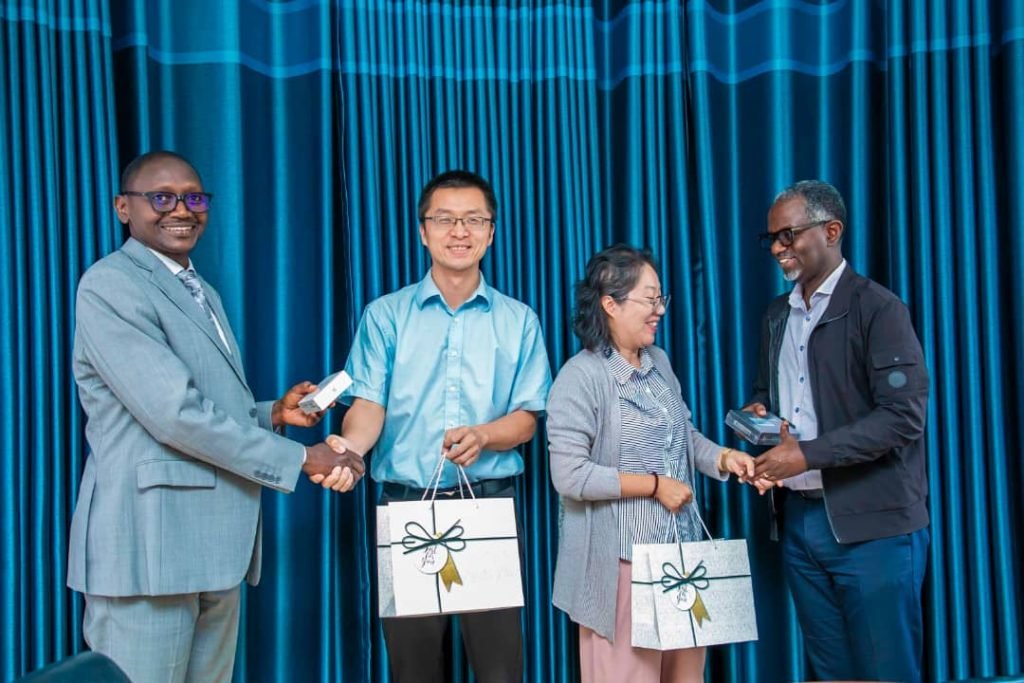
UNILAK hosted a strategic meeting to mark the start of a collaborative research project with the Xinjiang Institute of Ecology and Geography (XIEG), Chinese Academy of Sciences, on the 19th September 2025.
The three-year project, entitled “Formation Mechanisms and Emergency Response Strategies of Disasters Caused by Heavy Rainfall in East Africa,” officially began in September 2025. Its primary goal is to advance scientific understanding of extreme rainfall events in East Africa and propose effective response strategies to mitigate their social and economic impacts.
Speaking during the meeting, the Deputy Vice Chancellor for Academics and Research of UNILAK, Dr. Emmanuel Hakizimana, underscored the importance of the initiative:
“This partnership with XIEG is timely and vital. Heavy rainfall disasters affect lives, infrastructure, and economic activity across our region. Through this research, we aim to provide evidence-based solutions that will help governments, humanitarian actors, and communities respond more effectively.”
A representative from XIEG also expressed enthusiasm for the collaboration, noting:
“Working with UNILAK allows us to combine global expertise with local knowledge. Together, we will explore the science behind these disasters and propose strategies that are tailored to the East African context.”
Over the course of the project, researchers will conduct field studies, collect data, and employ simulation models to better understand rainfall patterns and disaster formation mechanisms.
The project is expected to generate actionable recommendations for policymakers and strengthen regional capacity for disaster preparedness and response.
This collaboration highlights UNILAK commitment to advancing research and innovation in climate science, disaster risk reduction, and sustainable development across Africa.