
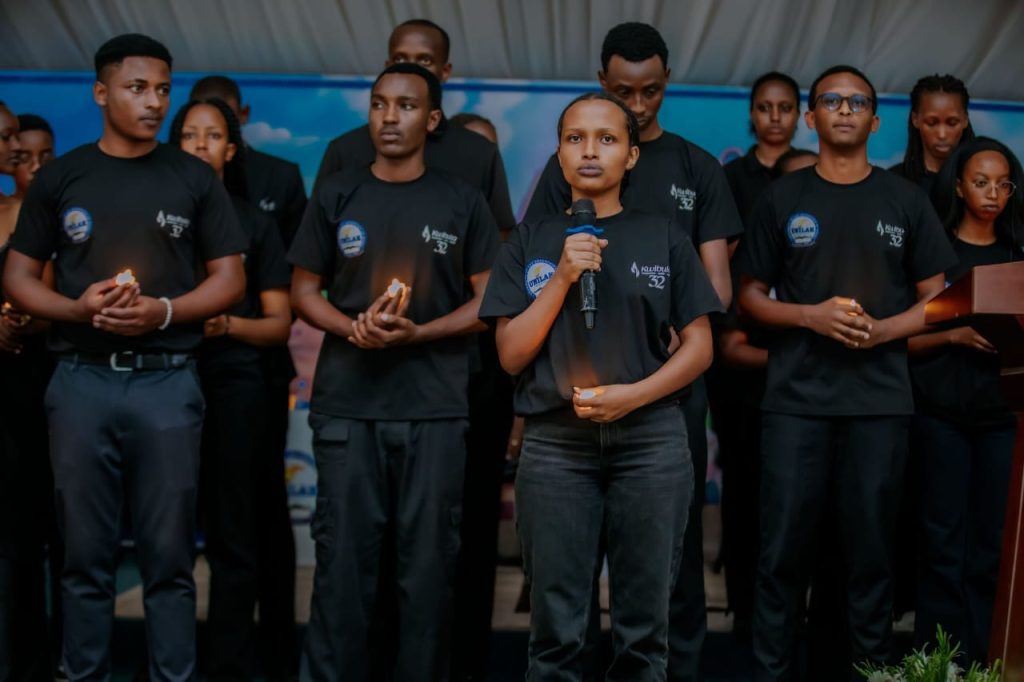
On 28th May, all campuses of UNILAK joined Rwandans in commemorating the 1994 Genocide against the Tutsi, through solemn events held simultaneously across Kigali, Rwamagana, and Nyanza campuses. The commemorations provided a shared moment of remembrance, education, and reflection on the history and lessons of the Genocide against the Tutsi.
At the Kigali Campus, the university community gathered for a central ceremony dedicated to honoring the victims and reaffirming its commitment to never again allowing genocide to occur.
Speaking at the event, Prof. Emmanuel Hakizimana, Deputy Vice Chancellor for Academics and Research, emphasized the importance of remembrance, stating that it is both a duty and a way of honoring those who were killed simply for being Tutsi. He also reflected on the deep wounds left in society, relationships, and the economy, noting their lasting impact on the nation today.
Col. Désiré Migambi Mungamba from the Rwanda Defence Forces reminded participants of their responsibility to protect Rwanda and actively reject hate speech, discrimination, and division. He urged unity, inclusion, and love as essential values for sustaining peace and national cohesion.
The guest speaker, Senator Prof. Penine Uwimbabazi, encouraged young people to uphold strong moral values, actively participate in remembrance activities, and serve as ambassadors of unity and reconciliation.
At Rwamagana Campus, Kwibuka32 began with the laying of flowers at the Kigabiro Memorial Site, followed by testimonies, prayers, and reflections. Participants honored the victims while reaffirming their commitment to unity, peace, and rejecting genocide ideology as a foundation for a brighter future.
Similarly, at Nyanza Campus, a solemn ceremony was held featuring candle lighting, prayers, and heartfelt testimonies in memory of the victims of the 1994 Genocide against the Tutsi. The gathering reinforced the importance of safeguarding unity and building resilience against divisive ideologies.
Across all campuses, the commemoration event served as a powerful reminder of shared history, collective responsibility, and the enduring commitment of UNILAK to promote peace, unity, and reconciliation.